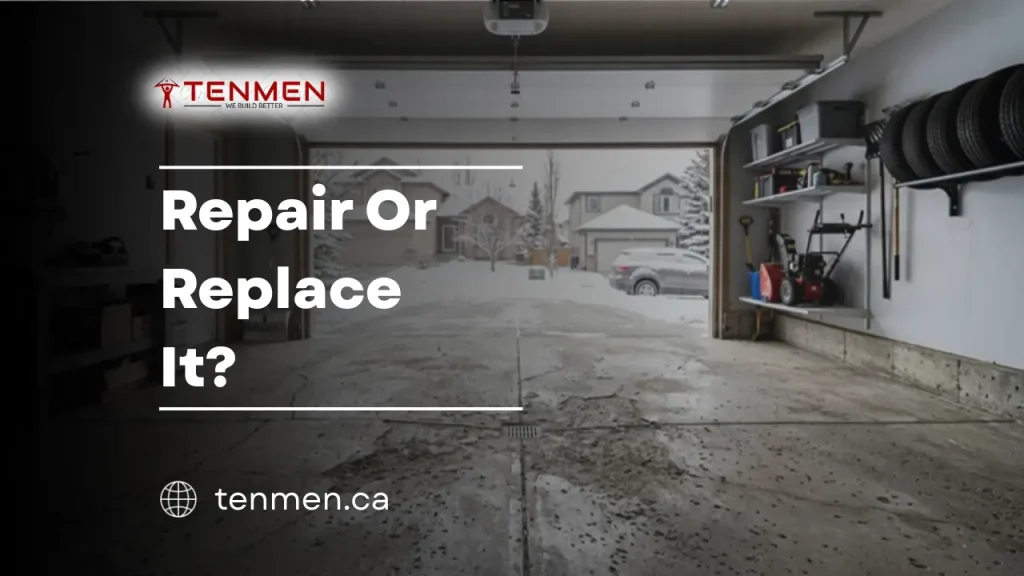
You pull into your garage after a long winter, and there it is: a crack running from one side of the slab to the other. Maybe the floor has started to heave near the overhead door, or you’re noticing chunks of surface flaking off every time you sweep. Whatever the symptom, your garage pad is trying to tell you something.
Calgary’s climate is brutal on concrete. We go through dozens of freeze-thaw cycles every winter, chinook winds can swing temperatures 30 degrees in a matter of hours, and the heavy clay soils underneath most Calgary and Airdrie homes shift constantly with moisture changes. All of that adds up to garage pads that take a beating, sometimes within just a few years of being poured.
The question most homeowners land on is simple: can I fix what I have, or do I need to start fresh? The answer depends on the type of damage, how deep it goes, and whether the problems are structural or cosmetic. This guide walks you through the signs to watch for, what causes garage pad failure in Calgary, and how to decide between repair, resurfacing, and full replacement.
Signs Your Garage Pad Needs Attention
Not all concrete damage is created equal. Some issues are surface-level annoyances. Others signal serious structural problems underneath. Here’s what to look for.
Surface Cracking
Hairline cracks (less than a quarter-inch wide) are common in almost every concrete slab. They’re usually caused by normal shrinkage as the concrete cures and aren’t a structural concern on their own. But if those cracks are growing wider, branching out, or showing vertical displacement (one side higher than the other), that points to base failure or frost heaving beneath the slab.
Spalling and Pitting
When the surface layer of your garage pad starts flaking, popping, or crumbling away, that’s spalling. It’s extremely common on Calgary garage pads that weren’t poured with air-entrained concrete or that have been exposed to road salt and de-icing chemicals year after year. Mild spalling is ugly but manageable. Widespread spalling that covers most of the floor usually means the mix itself wasn’t right for our climate.
Heaving and Settlement
If sections of your garage pad have lifted, sunk, or tilted, the problem isn’t the concrete. It’s the ground underneath. Calgary sits on expansive clay soil that swells when wet and shrinks when dry. Without proper base preparation (compacted gravel, adequate depth), the slab moves with the soil. Heaving is one of the clearest signs that repair alone won’t solve the problem.
Water Pooling
A properly sloped garage pad should shed water toward the door or a floor drain. If water is pooling in the middle of your floor or running toward the house, the slab has settled unevenly. Standing water accelerates freeze-thaw damage and can eventually work its way into your foundation.
Why Calgary Garage Pads Fail
Understanding the root cause helps you make a smarter repair-or-replace decision. On most Calgary jobsites, we see the same handful of issues behind nearly every failed garage pad.
Inadequate Base Preparation
This is the number one reason garage pads fail in our region. If the sub-base wasn’t excavated deep enough, or if the gravel wasn’t properly compacted before the pour, the slab has nothing stable to sit on. Clay soil underneath shifts with every heavy rain and every spring thaw, and the concrete moves with it.
Missing or Insufficient Reinforcement
A garage pad without rebar or wire mesh has no internal structure holding it together. When the ground moves (and in Calgary, it will), unreinforced concrete cracks and separates. Proper rebar reinforcement tied on chairs keeps the slab intact even when the soil beneath it shifts.
Wrong Concrete Mix
Alberta’s freeze-thaw cycle demands air-entrained concrete. The tiny air bubbles in the mix give water room to expand when it freezes inside the slab. Without air entrainment, moisture trapped in the concrete expands and blows the surface apart from the inside out. That’s how spalling starts.
Salt and Chemical Exposure
Road salt tracked in on tires, plus de-icing products applied near the garage door, eat away at concrete over time. The chloride penetrates the surface and accelerates the freeze-thaw damage cycle. This is especially damaging on pads that were never sealed after pouring.
Repair vs. Resurface vs. Replace: A Decision Framework
Here’s a practical way to think through your options. The right choice depends on the extent of the damage, the condition of the base underneath, and your long-term plans for the space.
When Repair Makes Sense
Repair is appropriate when the damage is limited and the slab underneath is still structurally sound. Good candidates for repair include:
- Isolated cracks less than a quarter-inch wide
- Small areas of surface spalling (less than 10% of the floor)
- Minor cosmetic chipping around edges
- A single section that has settled slightly
Repairs typically involve crack filling, patching compounds, or grinding down uneven joints. They’re affordable, but they’re also cosmetic fixes. If the underlying problem (bad base, no rebar, wrong mix) hasn’t been addressed, the same damage will come back.
When Resurfacing Works
Resurfacing means applying a thin overlay (usually a polymer-modified cement) over the existing slab. It gives you a fresh, clean surface without tearing out the old pad. Resurfacing works when:
- The existing slab is structurally stable with no heaving or major settlement
- Surface damage (spalling, pitting, minor cracks) covers a larger area
- You want to improve the look of an older pad without full replacement
The catch: resurfacing is only as good as the slab underneath. If the base is failing, an overlay will crack and delaminate within a season or two. Experienced concrete finishers know that slapping a fresh surface over a bad foundation just delays the inevitable.
When Full Replacement Is the Right Call
Full replacement means removing the old slab entirely, re-excavating and re-compacting the base, and pouring a brand-new pad from scratch. This is the right move when:
- Cracks are widespread and show vertical displacement
- The slab has heaved, sunk, or tilted significantly
- Spalling covers more than a third of the surface
- The original pad was poured without adequate base prep or reinforcement
- You’re dealing with recurring damage that keeps coming back after repairs
- The pad is 25+ years old and showing its age across the board
Full replacement costs more upfront, but it’s the only option that actually solves the root cause. Done properly with the right base, reinforcement, and mix design, a new garage pad in Calgary should last 30 to 50 years. You can read more about how long concrete lasts in Calgary and the factors that affect its lifespan.
What a Proper Garage Pad Replacement Involves
If you’ve decided replacement is the way to go, here’s what the process looks like when it’s done right.
1. Removal of the Old Slab
The existing pad is broken up (usually with a skid steer or excavator) and hauled away. This is also the time to inspect the sub-base and identify drainage issues, root intrusion, or soil problems that contributed to the failure.
2. Excavation and Base Prep
This is where the real work happens. The sub-grade is excavated to the proper depth, typically 8 to 12 inches below the finished slab height. Compacted road-crush gravel is laid down in lifts and mechanically compacted to create a stable, well-draining base. In areas with particularly expansive clay, deeper excavation or additional gravel depth may be needed. Proper site prep is something a lot of contractors skip, but it’s the single biggest factor in whether your pad lasts 5 years or 50.
3. Forming, Reinforcement, and Expansion Joints
Wooden or metal forms are set to define the pad’s shape and ensure a consistent thickness (typically 4 to 5 inches for a standard residential garage). Rebar is tied and set on chairs to sit at the proper height within the slab. Control joints are planned to manage where cracks will naturally occur, and expansion material is placed where the pad meets the foundation wall.
4. Pouring and Finishing
Air-entrained concrete is poured, spread, vibrated to remove air pockets, and finished to the desired texture. For a standard garage pad, a broom finish provides good traction. The slab is sloped toward the garage door for proper drainage.
5. Curing and Sealing
Proper curing takes time. The slab needs to be kept moist and protected for at least 7 days. After a full 28-day cure, applying a quality concrete sealer protects the surface from moisture penetration, salt damage, and freeze-thaw spalling. This step alone can add years to the life of your pad.
Cost Factors for Garage Pad Repair, Resurfacing, and Replacement
Pricing varies based on the size of the pad, the extent of the damage, and the scope of the work required. Here’s a general sense of how the three options compare for a standard two-car garage pad in Calgary.
Repair
Crack filling and small patches are the most affordable option, but they’re limited in what they can fix. Expect costs in the range of a few hundred dollars for minor work. Complex repairs involving multiple sections cost more but are still well below a full replacement.
Resurfacing
Overlay systems cost more than patch repairs because they cover the entire surface. Material and labour for a full-pad overlay fall between a simple repair and a full tear-out. Longevity depends entirely on the condition of the existing slab.
Full Replacement
A complete tear-out and repour is the most significant investment, but it’s also the only option that addresses base problems, reinforcement, and mix design all at once. For a detailed look at current pricing, our guide to concrete driveway costs in Calgary provides a useful reference, as garage pads follow similar cost-per-square-foot ranges.
Factors that affect pricing include pad size, thickness requirements, accessibility for equipment, disposal of the old slab, and whether the sub-base needs additional gravel or drainage work.
Upgrade Your New Pad with an Epoxy or Polyaspartic Coating
If you’re investing in a full garage pad replacement, this is the perfect time to think about what goes on top. A bare concrete floor works fine, but an epoxy garage floor coating transforms the space.
Epoxy and polyaspartic coatings bond directly to the concrete surface and create a seamless, chemical-resistant, easy-to-clean floor. They protect against salt, oil stains, tire marks, and the kind of wear and tear a Calgary garage sees every day. You can choose from solid colours, decorative flake blends, or even metallic epoxy finishes for a high-end look.
The key is timing. A new concrete slab needs a full 28-day cure before any coating can be applied. When we pour a garage pad and plan for a coating, we factor that timeline in from the start so everything lines up.
Ready to Fix or Replace Your Calgary Garage Pad?
Whether your garage pad needs a targeted repair or a complete tear-out and repour, the first step is the same: an honest assessment of what’s going on with the slab and the ground underneath it.
At Tenmen Construction, we specialize in concrete garage pads built for Calgary’s climate. That means proper excavation, compacted gravel bases, rebar reinforcement, air-entrained concrete, and finishes that hold up through decades of Alberta winters. Every project starts with a free on-site estimate and transparent, line-item pricing so you know exactly what you’re getting.
If your garage pad is cracking, heaving, or falling apart, give us a call at (825) 882-9406 or reach out through our contact page. We’ll come take a look and give you a straight answer on whether repair or replacement is the right move for your situation.